
The Qualitative Systems Exploration Model - Dr Adam Hulme
Component #1: The Qualitative Systems Exploration Model (QSEM)
Causal Loop Diagrams (CLDs) are widely used in systems thinking and across many qualitative research traditions when the aim is to make sense of complexity, feedback and context. Once a map has been drawn, however, there is often surprisingly little guidance about what to do next. How should the structure of the map be read systematically? How can the feedback mechanisms it contains be compared more transparently? And how can a conceptual map be turned into a reproducible piece of qualitative analysis when the questions being asked are evaluative in nature?
This talk introduces the Qualitative Systems Exploration Model (QSEM), a semi-quantitative method and software platform developed by Dr Hulme. QSEM builds directly on participatory systems mapping. The team that drew the map assigns short, structured judgements to each connection in it. Those judgements are not measurements; they are participant opinions placed on an ordinal scale. From them, QSEM derives a connected set of analytical views that allow the same map to be inspected, compared and ranked in ways a purely visual diagram does not afford. The effect is to bridge the interpretive depth of qualitative systems work with the structural transparency more often associated with quantitative analysis, while keeping the participatory foundation in place throughout.
The presentation will walk through the logic of the method using a worked example, show how it sits alongside familiar participatory mapping practice rather than replacing it, and explain how it can support more transparent, reproducible qualitative analysis of evaluative questions: what might be driving the behaviour we see, where influence may lie, which feedback structures merit closer attention, and how candidate leverage points can be discussed with their trade-offs visible.
Component #2: Regional Mental Health Systems Modelling
This seminar introduces a work-in-progress system dynamics model of the regional primary mental healthcare system for non-acuate common-disorders, developed to explore how workforce capacity, service demand, patient flow, and behavioural responses interact over time. The model links service supply, waiting lists, treatment access, workforce recruitment and turnover, and feedback such as workforce energy, professional passion, service quality, public perception, and care-seeking motivation. Its purpose is to better understand how shortages, delays, and behavioural adaptation can amplify or dampen pressure across the system, and to support more realistic workforce and service planning.
The session will outline the model’s core structure, explain the main feedback mechanisms, and show how service-based capacity can be translated into people-equivalent treatment capacity within a dynamic demand-supply framework. The model has been refined and calibrated to datasets. The seminar will be open floor in style, allowing time for demonstration, questions, critique, and discussion of both the conceptual structure and its practical policy relevance.
Bio
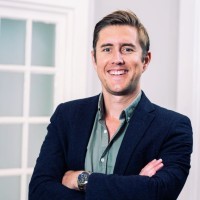 Dr Adam Hulme is a Senior Research Fellow, ARC DECRA Fellow, and School Research Chair with Southern Queensland Rural Health (SQRH) at The University of Queensland. He is a multidisciplinary systems scientist whose research focuses on complex adaptive systems and the application of systems and complexity science to policy-resistant challenges in health and other sociotechnical systems. Adam is recognised for his contributions to systems thinking, sociotechnical systems theory, and systems science methods and models. He has authored books in these areas and published extensively on the theory, methods, reliability and validity, and application of systems science across diverse fields. His work has helped advance the use of systems approaches to better understand, model, and respond to complex real-world challenges. Recently Adam created QSEM, a new theory, method and software platform to support individuals and groups with systems modelling, systems analysis, and consumer engagement.
This seminar will be presented online via Microsoft Teams.
About Seminar series
The School of Dentistry Seminar Series is an opportunity to highlight outstanding research both within the School and from national and international guest speakers.
All are welcome to attend, including academic and professional staff, visitors, students, industry partners, dental industry professionals and the general public. Seminars are held at various times at the Oral Health Centre, Herston, and online.
In addition to our general School series, additional seminars will be presented by our various research groups.